
The best 25 Books on AI (Artificial intelligence) and SI (Superintelligence) for 2026
Ranked, with who each is for, and where to buy it
By TheBestSuperintelligence Editorial TeamUpdated
What are the best books on artificial superintelligence and AI safety?
Start with Bostrom's Superintelligence for the original argument, Stuart Russell's Human Compatible for the proposed fix, and Max Tegmark's Life 3.0 for the wider future. This guide ranks 25 verified books, plus 5 newer titles we could not confirm.
◈Key Takeaways (3)
- •Read Bostrom's Superintelligence for the original argument and Russell's Human Compatible for the proposed fix.
- •Start with Armstrong's Smarter Than Us or Mitchell's Guide for Thinking Humans if you have no technical background.
- •For the most pessimistic case, read Yudkowsky and Soares; for the optimistic one, Kurzweil. Read one of each.
☰On this page (8 sections)
- 01.AI alignment books and superintelligence classics: the ten to read first
- 02.Best books on AI safety, plus books on AI existential risk and ethics
- 03.AGI books: the future, geopolitics and where AI is heading
- 04.Books that explain how AI works and what it does to work
- 05.Newer superintelligence books we could not verify
- 06.Which superintelligence book should you read first?
- 07.Limits of this guide
- 08.Sources & Further Reading
The best books on artificial superintelligence split into three jobs: the original argument (Bostrom), the proposed solution (Russell), and the wider future (Tegmark). Ranks 1 to 10 below are our order for someone trying to understand the superintelligence debate. Ranks 11 to 25 are grouped by topic, best first within each group. Newer titles we could not verify come last.
Affiliate disclosure: book links go to Amazon through our Associates tag. As an Amazon Associate we earn from qualifying purchases, at no extra cost to you. It does not change the order. For a closer comparison of six of these, see our best superintelligence books guide.
AI alignment books and superintelligence classics: the ten to read first#
These ten define the debate. Bostrom set the vocabulary, Russell proposed an answer, and the rest test, popularise or challenge both.
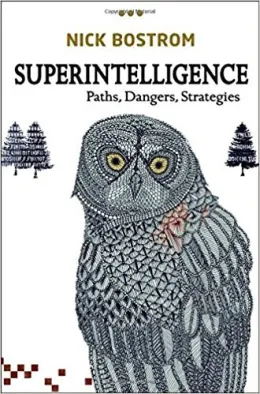
Superintelligence: Paths, Dangers, Strategies
Best for: Anyone who wants the original superintelligence argument
The foundational text. It introduces the orthogonality thesis (intelligence and final goals are independent) and instrumental convergence (most goals lead to self-preservation and resource-seeking). Dense, and written before today's language models, so read it for the argument, not the technology.
View on Amazon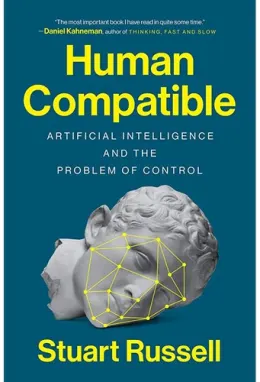
Human Compatible: Artificial Intelligence and the Problem of Control
Best for: AI alignment from a leading researcher's view
Russell argues the standard model of AI, optimising a fixed objective, is flawed, and proposes machines that stay uncertain about human preferences and defer to oversight. Read Bostrom to understand the problem and this to see a proposed way out.
View on Amazon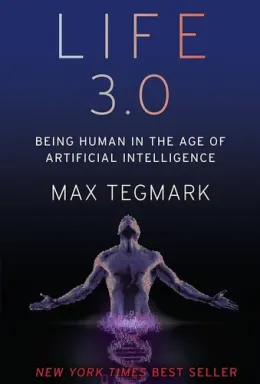
Life 3.0: Being Human in the Age of Artificial Intelligence
Best for: The widest view of what advanced AI could do to society
Tegmark covers jobs, warfare, politics, consciousness and humanity's long-term future. It is broader than it is deep on alignment, which is why it ranks third rather than first.
View on Amazon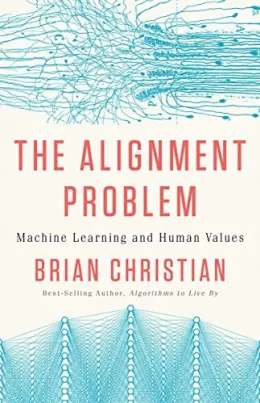
The Alignment Problem: Machine Learning and Human Values
Best for: Real AI failures today: bias, reward hacking, misspecified goals
Christian shows alignment is not only a future problem by examining failures in deployed machine-learning systems. A grounded reality check before the more speculative books.
View on Amazon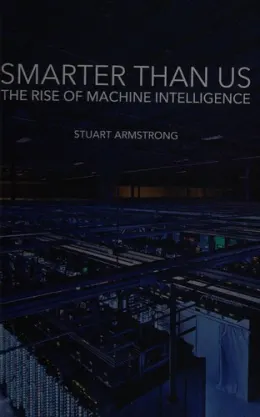
Smarter Than Us: The Rise of Machine Intelligence
Best for: Beginners who want a short introduction
Published by the Machine Intelligence Research Institute, it explains the control problem in plain language with no technical background needed. Read it before Bostrom.
View on Amazon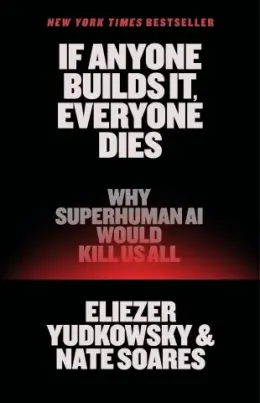
If Anyone Builds It, Everyone Dies
Best for: The strongest case that superhuman AI means catastrophe
The most uncompromising argument in print: building superhuman AI before solving alignment would lead to human extinction. Read it after Bostrom and Russell, and alongside a more hopeful book.
View on Amazon
Artificial Superintelligence: A Futuristic Approach
Best for: Advanced readers and technical students
An academic treatment of the safety-engineering and philosophical problems of systems that exceed human ability. A specialist addition, not a first book.
View on Amazon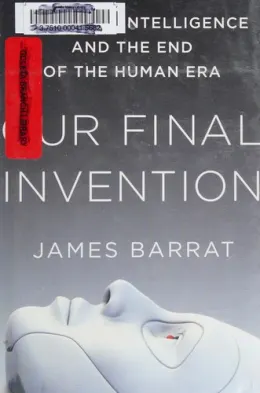
Our Final Invention: Artificial Intelligence and the End of the Human Era
Best for: General readers who want the history of the AI-risk debate
Built from interviews with AI researchers, it captures how the risk argument reached the public before deep learning. Dated on technology, still useful on the people and the arguments.
View on Amazon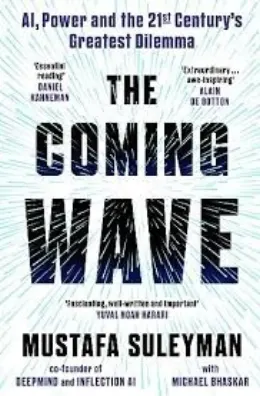
The Coming Wave
Best for: Policymakers and business leaders
DeepMind co-founder Suleyman argues AI and synthetic biology are becoming powerful, cheap and hard to contain, and that societies need new governance. The best book here on the political context advanced AI will arrive in.
View on Amazon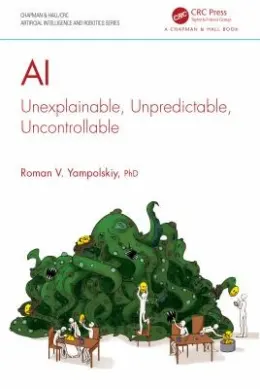
AI: Unexplainable, Unpredictable, Uncontrollable
Best for: Advanced readers on the limits of control
Yampolskiy argues that the behaviour of highly capable AI cannot be reliably explained, predicted or controlled. It is one author's contested position, so read it as a provocation, not a consensus.
View on Amazon
Best books on AI safety, plus books on AI existential risk and ethics#
Five books that widen the frame: AI as one risk among several, the physical and human costs of AI, and what an ordinary reader can do.
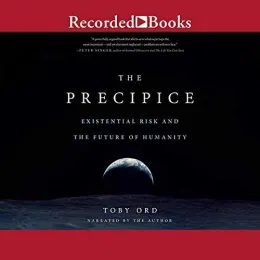
The Precipice: Existential Risk and the Future of Humanity
Best for: Seeing AI risk next to pandemics, nuclear war and climate
Ord puts the chance of existential catastrophe from unaligned AI this century at 1 in 10, the highest of the risks he assesses. AI is one part of the book, argued with unusual rigour.
View on Amazon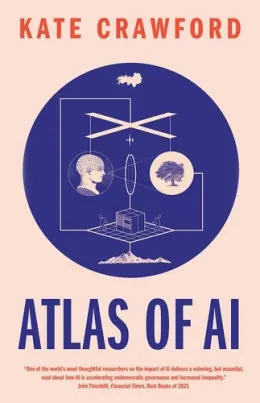
Atlas of AI
Best for: The hidden labour, data and energy costs of AI
Crawford moves from abstract algorithms to the physical reality: mining, labour, data extraction and energy use. The counterweight to books that treat AI as pure software.
View on Amazon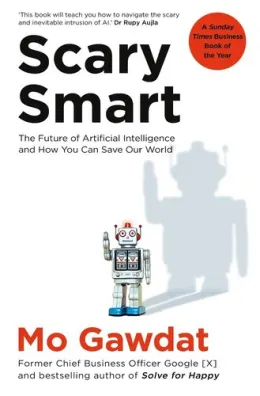
Scary Smart
Best for: Readers who want practical steps, not theory
Former Google X executive Gawdat argues AI learns from how we behave and offers things individuals can do to shape it. A popular advice book, lighter on technical rigour than Russell or Christian.
View on Amazon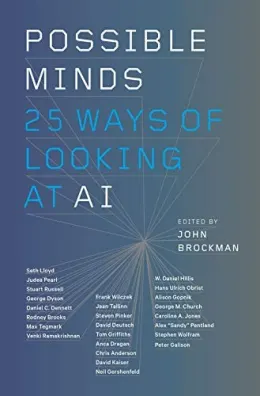
Possible Minds: Twenty-Five Ways of Looking at AI
Best for: Many expert views in short essays
Twenty-five essays from scientists and thinkers, including Stuart Russell, Max Tegmark and Steven Pinker. Good for sampling positions before committing to a full book.
View on Amazon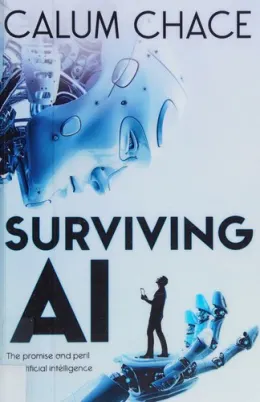
Surviving AI
Best for: A short guide that separates near-term from long-term risk
Chace separates the economic effects of AI from the long-term risk of superintelligence. Short and clear, and older than the 2019 to 2025 books above.
View on Amazon
AGI books: the future, geopolitics and where AI is heading#
From Kurzweil's optimism to Kissinger's geopolitics, these ask what happens to society as AI approaches general intelligence.
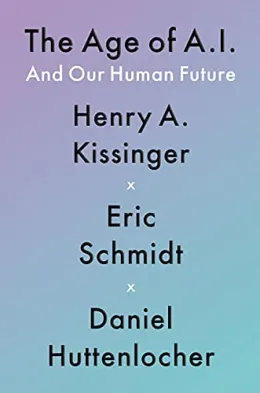
The Age of AI: And Our Human Future
Best for: Geopolitics and how AI changes knowledge and power
Argues AI challenges how humans know things and how states compete. Written by a statesman, a former Google chief executive and an MIT dean, so expect the institutional view.
View on Amazon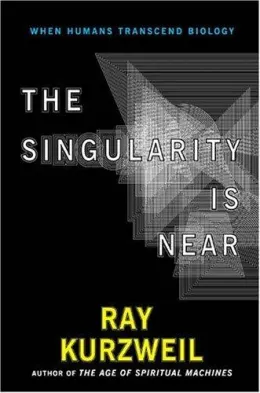
The Singularity Is Near: When Humans Transcend Biology
Best for: The classic optimistic case
Kurzweil predicts humans and machines merging around 2045. The counterweight to Yudkowsky, and a book whose specific predictions deserve checking against what has happened since 2005.
View on Amazon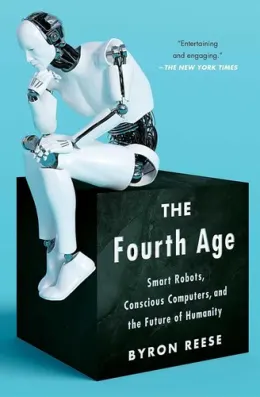
The Fourth Age: Smart Robots, Conscious Computers, and the Future of Humanity
Best for: The long view of AI as a human technological age
Frames AI and robots as the fourth great technological age of humanity and asks what it means if computers become conscious. Accessible and speculative.
View on Amazon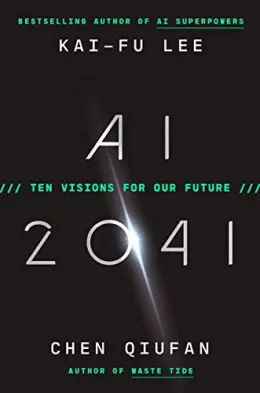
AI 2041: Ten Visions for Our Future
Best for: Fiction plus analysis of AI in daily life
Ten short stories set in 2041, each followed by technical analysis. The most readable book here for a non-technical reader.
View on Amazon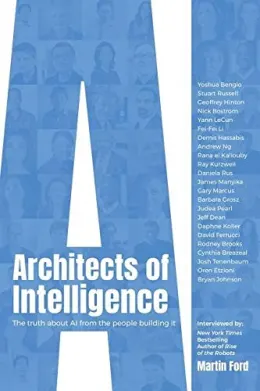
Architects of Intelligence
Best for: Hearing the researchers themselves
Interviews with 23 leading AI researchers and founders, including Geoffrey Hinton and Fei-Fei Li, on the path to general AI. Shows how much the experts disagree.
View on Amazon
Books that explain how AI works and what it does to work#
Read these if you want to judge AI claims, not only the superintelligence debate.
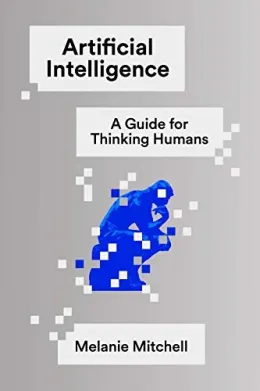
Artificial Intelligence: A Guide for Thinking Humans
Best for: A sceptical, technical-but-readable first book
Explains how AI methods work, what they cannot do and where hype outruns results. The antidote to both hype and doom, though it predates today's language models.
View on Amazon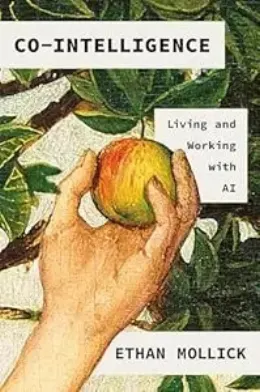
Co-Intelligence: Living and Working with AI
Best for: Using today's AI at work
A practical guide to working with generative AI. It is not about superintelligence, but it is the most useful book here for what you can do with AI this week.
View on Amazon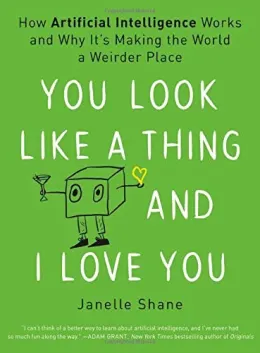
You Look Like a Thing and I Love You
Best for: A funny, accessible look at how AI fails
Shane uses absurd examples of machine learning going wrong to show why specifying human goals is hard, the alignment problem at human scale.
View on Amazon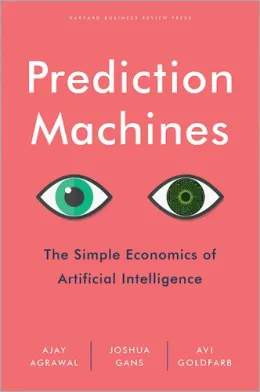
Prediction Machines: The Simple Economics of Artificial Intelligence
Best for: Business leaders
Reframes AI as a drop in the cost of prediction and works out what that does to business decisions. Economics, not existential risk.
View on Amazon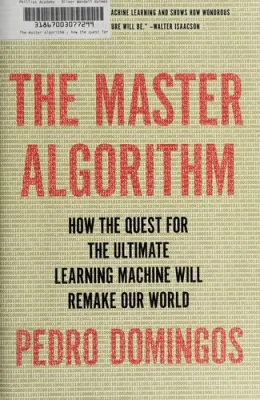
The Master Algorithm
Best for: The machine-learning landscape in plain language
A tour of the five "tribes" of machine learning and the search for one universal learning algorithm. Pre-dates the transformer era, so treat the technical picture as history.
View on Amazon
Newer superintelligence books we could not verify#
We found no catalogue record for these five titles, so we did not rank or summarise them. Authors and titles are as supplied; check the Amazon listing for publisher, date and reviews before buying.
- Super AI, Maria Johnsen
- Superintelligence or Super Threat, J. F. Hillary
- Beyond Human: The Coming Age of Super Intelligence, Ryan Joseph
- SUPER AI: The AGI Revolution, Ritesh Sonvane
- How AI Will Shape Our Future, Pedro Uria-Recio
Which superintelligence book should you read first?#
| If you want to understand | Start with | Then read |
|---|---|---|
| What superintelligence means | Superintelligence | Smarter Than Us |
| How AI could be aligned with human values | Human Compatible | The Alignment Problem |
| Whether AI could threaten humanity | Superintelligence | If Anyone Builds It, Everyone Dies |
| The future of civilisation and geopolitics | Life 3.0 | The Coming Wave |
| The costs of AI today | The Alignment Problem | Atlas of AI |
| A short book for a beginner | Smarter Than Us | You Look Like a Thing and I Love You |
Our take. If you read five, read them in this order: Smarter Than Us for the premise, Superintelligence for the concepts, Human Compatible for the technical response, The Alignment Problem for today's failures, and Life 3.0 for the wider future. Then add one book from the opposite side of whatever convinced you: Yudkowsky and Soares if you lean hopeful, Kurzweil if you lean fearful.
Limits of this guide#
Takes summarise each book's stated argument; they are not full reviews. Several older books predate today's language models. Prices and availability vary by country and retailer, so we show none. The order is our judgement of fit for newcomers, not sales rank.
Sources & Further Reading#
| Claim / Topic | Source | Date |
|---|---|---|
| Titles, authors, ISBNs, first publication years for ranks 1 to 25 | Open Library | read 2026-11-03 |
| Book covers (resized copies) | Open Library Covers | read 2026-11-03 |
| Orthogonality thesis, instrumental convergence | Bostrom, Superintelligence (Oxford University Press, 2014) | 2014 |
| Machines uncertain about human preferences | Russell, Human Compatible (Viking, 2019) | 2019 |
| 1 in 10 chance of existential catastrophe from unaligned AI this century | Ord, The Precipice (2020) | 2020 |
| Extinction argument | Yudkowsky and Soares, If Anyone Builds It, Everyone Dies (2025) | 2025 |
| Five newer titles | Amazon listings only; no catalogue record found | read 2026-11-03 |
Frequently asked questions
What are the best books on artificial superintelligence?
Start with Bostrom's Superintelligence for the original argument, Stuart Russell's Human Compatible for the proposed fix, and Max Tegmark's Life 3.0 for the wider future. This guide ranks 25 verified books, plus 5 newer titles we could not confirm.
Which AI safety book should a beginner read first?
Stuart Armstrong's Smarter Than Us. It is short, published by the Machine Intelligence Research Institute, and needs no technical background. Read it before Bostrom's Superintelligence, which is denser. If you want today's systems rather than the future, Melanie Mitchell's Artificial Intelligence: A Guide for Thinking Humans is the better first book.
What is the best book on AI alignment?
Stuart Russell's Human Compatible. It argues that machines built to optimise a fixed objective are the problem, and proposes machines that stay uncertain about human preferences and defer to people. Pair it with Brian Christian's The Alignment Problem, which covers failures in deployed systems today.
Which book argues most strongly that superintelligent AI could cause human extinction?
Eliezer Yudkowsky and Nate Soares, If Anyone Builds It, Everyone Dies (2025), which argues that building superhuman AI with current methods would end humanity. Toby Ord's The Precipice is more measured: he puts the chance of existential catastrophe from unaligned AI this century at 1 in 10.
Are there books that are optimistic about superintelligence?
Ray Kurzweil's The Singularity Is Near is the classic optimistic case: humans and machines merge and transcend biological limits. For a sceptic of both hype and doom, read Melanie Mitchell. Ethan Mollick's Co-Intelligence is optimistic but about working with today's AI, not superintelligence.
How we sourced this. Read 2026-11-03 against Open Library. We earn a commission on Amazon purchases. Methodology