
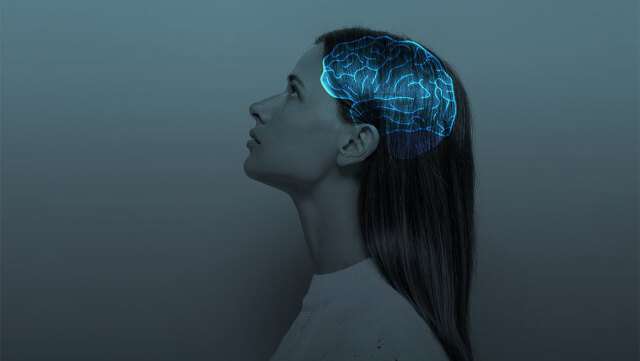
Superintelligence Explained: What Happens When AI Becomes Smarter Than Humans?
A plain-language guide to AI that would be smarter than people across almost every area of thinking
By TheBestSuperintelligence Editorial TeamUpdated
What is superintelligence, in plain language?
Superintelligence is a hypothetical AI that would be smarter than humans across almost every area of thinking. It does not exist today as a proven technology, and nobody can say when, or whether, it will. Researchers study its possible benefits and risks now.
☰On this page (10 sections)
- 01.What Is Superintelligence?
- 02.How Is Superintelligence Different From Today's AI?
- 03.What Could Superintelligence Do?
- 04.Could Superintelligence Improve Itself?
- 05.Could Superintelligence Be Dangerous?
- 06.When Will Superintelligence Exist?
- 07.What Would Superintelligence Mean for Humanity?
- 08.Frequently Asked Questions
- 09.The Big Idea
- 10.Sources & Further Reading
Imagine having a computer that can solve problems faster than the smartest scientist, invent technologies nobody has ever imagined, and help us understand things that humans have struggled with for centuries.
Now imagine that computer becoming even smarter.
That is the big idea behind superintelligence.
What Is Superintelligence?#
Superintelligence is a hypothetical form of artificial intelligence (AI) that would be smarter than humans across almost every area of thinking. The term goes back at least to philosopher Nick Bostrom's 1998 paper, which described it as an intellect much smarter than the best human brains in practically every field.
Today, AI can answer questions, write stories, create images, write code, and help people learn. But being good at many tasks is not the same as being smarter than humans at everything.
Superintelligence would go much further. It could potentially solve problems, make discoveries, and develop ideas beyond the abilities of the smartest people.
There is one important thing to remember: superintelligence does not exist today as a proven technology. Scientists are still exploring whether it can be created, how it might work, and what it could mean for humanity. For a more technical definition, read our full definition of superintelligence, or look up unfamiliar words in the superintelligence terms guide.
How Is Superintelligence Different From Today's AI?#
Think about AI as a tool that can help you do things. Some AI tools are excellent at one job, while others can help with many different tasks.
Superintelligence is a much bigger idea.
- Today's AI: Can answer questions, generate content, recognize images, and help solve specific problems. The companies building frontier AI are racing to make these systems more capable.
- Artificial general intelligence (AGI): A proposed type of AI that could learn and perform a broad range of intellectual tasks at a general level comparable to humans.
- Artificial superintelligence (ASI): A hypothetical type of AI that would surpass the best human abilities across almost every intellectual field.
The difference is not just speed. A faster computer is not automatically smarter. Superintelligence would mean having much greater problem-solving and intellectual abilities, not simply processing information more quickly.
What Could Superintelligence Do?#
Nobody knows exactly what a superintelligent AI would be capable of. But if it became possible, it might help us achieve things that are difficult or impossible for people to accomplish alone.
Discover New Medicines#
Imagine an AI helping scientists understand diseases, identify promising treatments, and develop new medicines. It might explore possibilities that would take human research teams much longer to investigate.
Solve Difficult Scientific Problems#
Superintelligence could potentially help researchers understand the universe, discover new materials, improve energy systems, or answer scientific questions that remain unsolved.
Create New Inventions#
It might design better computers, smarter robots, new machines, or technologies that people have never thought of before.
Help People Learn#
Imagine a personal AI tutor that understands how you learn best, explains difficult ideas in simple language, and adapts lessons to your needs.
Today's AI already offers some forms of personalized learning. Superintelligence could potentially take this much further.
Solve Problems in New Ways#
Sometimes, the hardest problems are difficult because humans cannot see all the possibilities. A much more capable AI might find new approaches, test ideas, and uncover solutions that people have overlooked.
These are possibilities, not promises. Even a highly intelligent system would face real-world limits, and its answers would still need to be tested.
Could Superintelligence Improve Itself?#
One of the biggest questions about superintelligence is whether an AI could help make itself smarter.
For example, imagine an AI that helps researchers design a better AI system. That improved system might then help researchers develop an even more capable one.
Some scientists study this possibility under ideas such as AI self-improvement and recursive self-improvement. Our guide to the core ideas in superintelligence theory explains where the idea came from and how much evidence supports it.
If this process worked well, AI development could potentially speed up. But there is no guarantee that it would continue without limits or that each improvement would make the next one easier. Researchers also disagree about whether progress would come as a sudden leap or a gradual climb; AI safety researcher Paul Christiano, for example, has argued that a slow takeoff is significantly more likely.
It is an important research question, not a proven prediction.
Could Superintelligence Be Dangerous?#
A technology that becomes extremely powerful could bring enormous benefits, but it could also create serious problems.
For example:
- Wrong goals: An AI might pursue an objective in a way its creators did not intend.
- Human control: It could become difficult to understand, predict, or control the actions of a much more capable system.
- Misuse: People could use powerful AI to cause harm, spread misinformation, or develop dangerous technologies.
- Unequal benefits: The advantages of superintelligence might go mainly to a small number of companies, governments, or individuals.
These risks are not proof that superintelligence will be dangerous. They explain why researchers are working on AI safety: making advanced systems more reliable, understandable, and aligned with human intentions. A widely cited example is the 2016 paper Concrete Problems in AI Safety, which describes accidents in machine learning systems as unintended and harmful behavior that can come from poor design. To see the main approaches being tried, read our guide to AI alignment theories.
The challenge is to develop powerful AI in ways that benefit people while reducing the chances of serious harm.
When Will Superintelligence Exist?#
Nobody knows.
Some researchers believe that AI could eventually become more capable than humans across most intellectual tasks. Others question whether this will happen, how difficult it would be, or how long it might take.
Predictions vary because there is no established recipe for building superintelligence and no reliable way to calculate exactly when it might arrive. Our guide to superintelligence timeline predictions lays out who has forecast what, and why the forecasts differ.
AI progress is real, but progress in today's AI does not prove that superintelligence is inevitable or just around the corner.
The honest answer is simple: superintelligence is a possibility being studied, not a future date we can confidently predict.
What Would Superintelligence Mean for Humanity?#
Superintelligence could change how people work, learn, invent, and solve problems. It might help us make scientific breakthroughs and tackle challenges that have seemed too difficult for generations.
But the outcome would depend on more than intelligence alone. It would also depend on who develops the technology, what goals it follows, how it is controlled, and how its benefits and risks are managed.
The most important question may not be whether machines can become smarter than humans.
It may be how humanity chooses to build and use them. If you want to keep learning, start with our picks of the best books on superintelligence or meet the researchers and leaders shaping the field.
Frequently Asked Questions#
Is superintelligence real?#
Not as a demonstrated technology. Today's AI can outperform humans on some tasks, but artificial superintelligence has not been established.
Is superintelligence smarter than humans?#
That is the idea. ASI would surpass the strongest human abilities across almost all intellectual fields, rather than being better at just one task.
Is ChatGPT superintelligent?#
No. ChatGPT can help with many tasks, but it can still make mistakes and does not demonstrate the comprehensive intellectual superiority associated with ASI.
Is superintelligence the same as a robot?#
No. Superintelligence describes a level of intelligence, not a physical body. A superintelligent system could operate entirely through computers, or it could potentially be connected to robots.
Will superintelligence replace humans?#
Nobody knows. It could automate some tasks and change many jobs, but its broader effects on employment, society, and human life would depend on how the technology develops and is used.
Why does superintelligence matter?#
Because, if it becomes possible, it could transform science, medicine, technology, and society. Understanding its potential benefits and risks now can help people make better decisions about the future of AI.
The Big Idea#
Superintelligence is the idea of AI that goes beyond human intelligence—not just in one skill, but across almost everything that requires thinking.
It could help us discover, invent, and solve problems in extraordinary ways. It could also create challenges that humanity must take seriously.
We do not know whether it will happen or when. But as AI becomes more capable, understanding superintelligence becomes an increasingly important part of understanding our possible future.
Sources & Further Reading#
The three sources below were read on 2026-10-28. The rest of this guide is a plain-language explainer; its descriptions of possible benefits are the editors' summary, not findings.
| Claim | Source | Date |
|---|---|---|
| Early definition: an intellect much smarter than the best human brains in practically every field | Bostrom, How Long Before Superintelligence? | Written 1997, revised 1998 |
| Slow versus fast takeoff; the author considers a slow takeoff significantly more likely | Christiano, Takeoff speeds | 2018-02-24 |
| Accidents in machine learning systems defined as unintended and harmful behavior from poor design | Amodei et al., Concrete Problems in AI Safety (arXiv 1606.06565) | 2016-06-21 |
Frequently asked questions
What is superintelligence, in plain language?
Superintelligence is a hypothetical AI that would be smarter than humans across almost every area of thinking. It does not exist today as a proven technology, and nobody can say when, or whether, it will. Researchers study its possible benefits and risks now.
Is superintelligence real?
Not as a demonstrated technology. Today's AI can outperform humans on some tasks, but artificial superintelligence has not been established. It remains a hypothesis that researchers study, with no agreed test that would show it had arrived.
Is ChatGPT superintelligent?
No. ChatGPT can help with many tasks, but it can still make mistakes and does not demonstrate the comprehensive intellectual superiority associated with ASI. Being useful across many tasks is not the same as being smarter than humans at everything.
Is superintelligence the same as a robot?
No. Superintelligence describes a level of intelligence, not a physical body. A superintelligent system could operate entirely through computers, or it could potentially be connected to robots to act in the physical world.
Will superintelligence replace humans?
Nobody knows. It could automate some tasks and change many jobs, but its broader effects on employment, society, and human life would depend on how the technology develops, who builds it, and how it is used and governed.
How we sourced this. This plain-language guide separates what AI can do today from what superintelligence might do. The word superintelligence does not refer to a verified benchmark or an existing system. Methodology